
Why February Matters (Even If Your Lawn Looks… Well, Frozen)
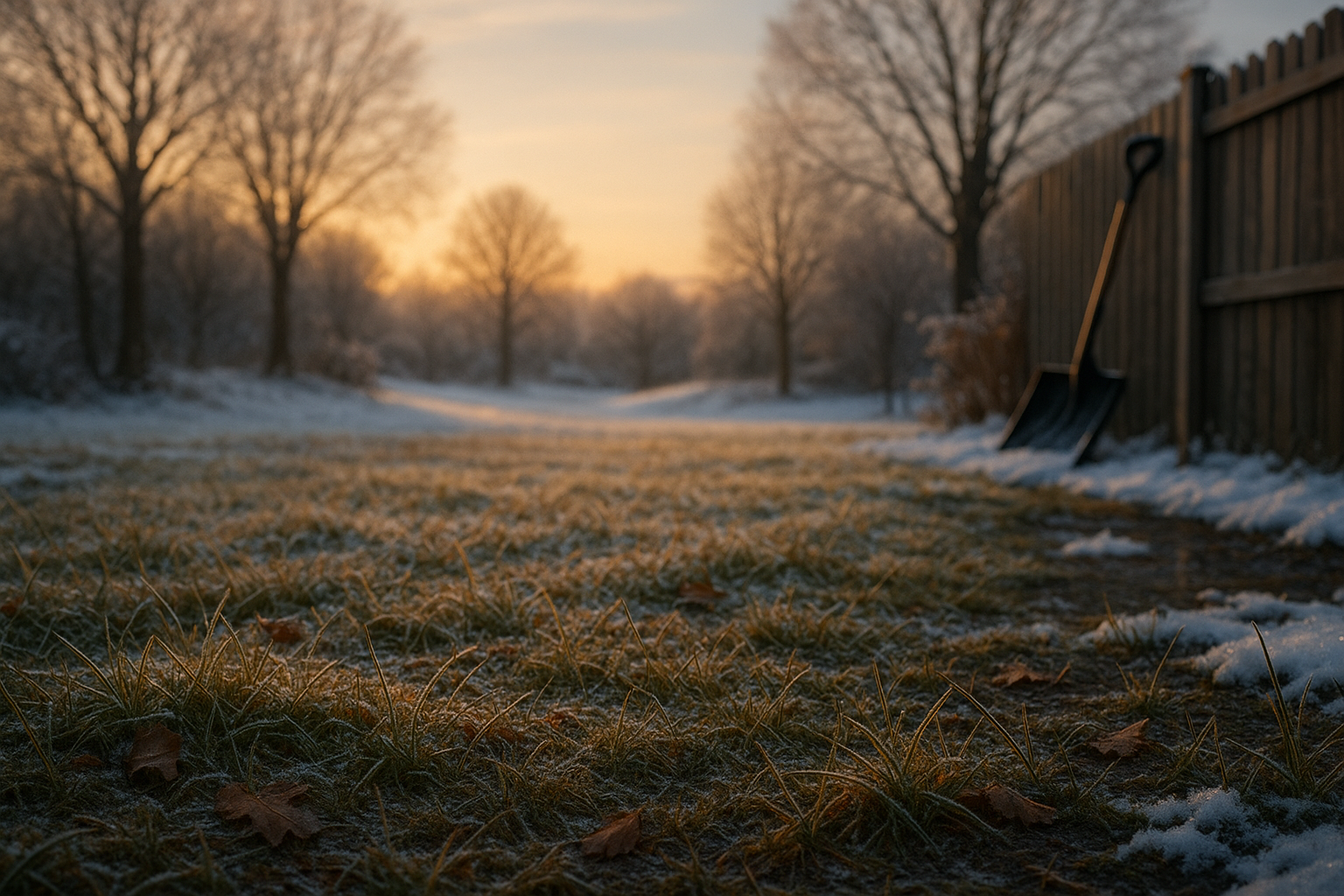
Let’s be real: February in Michigan is not cute. It’s cold. It’s icy. It’s gray. Your lawn is basically a crunchy green-brown carpet frozen in place. But — did you know — February is one of the most strategic months of the year for lawn prep.
Michigan lawn calendars treat January and February as full-on dormancy months, where the lawn isn’t growing, and outdoor work is minimal.
That means the grass is asleep…
…but YOU don’t have to be.
Experts say this is the time to do the behind-the-scenes moves: checking for trouble spots, planning spring services, and inspecting drainage issues so you’re 10 steps ahead when the thaw hits.
February lawn care is the equivalent of heating up your muscles before a big race — the real action’s coming, but you can get a massive advantage by prepping now.
In Michigan, February is full, deep winter — no pretending, no warm-ups. Your lawn is dormant, soil is frozen, and outdoor work stays minimal. Michigan lawn calendars define both January and February as true dormancy months, where the grass rests and homeowners shift into planning mode.
But experts also note that February is ideal for spotting problems early and preparing for spring before everything thaws and chaos begins.
So yes — your lawn looks crunchy, but this month is secretly important.
February in Michigan isn’t a “maybe-spring-soon” month — it’s solidly winter, with frozen ground, lingering snow, and a fully dormant lawn. Michigan lawn calendars treat January AND February as the deep dormancy and planning period, not a transition to spring.
Outdoor tasks are minimal, and conditions typically remain cold enough that most homeowners can only do monitoring and prep — which is exactly what Michigan experts recommend for February.But that doesn’t mean February isn’t important. This is the month where smart prep = a greener, thicker lawn once temperatures finally climb. Let’s dive into what Michigan homeowners should actually be doing.
February Lawn Checklist: Quick Tasks That Make a Big Difference

1. Don’t Step on Your Lawn. Seriously. Don’t.
Frozen grass snaps like dry spaghetti — and it’s way more expensive to replace. Walking on frozen or snow‑covered turf compacts the soil and cracks the grass blades, slowing spring recovery, so it’s best to avoid stepping on it altogether.
Do this instead:
- Stick to shoveled paths.
- Avoid dragging equipment across the yard
- Keep kids/pets off mushy or icy turf.
2. Clear Any Debris That Shows Up
Every mild Michigan winter day is like a surprise episode of "What the Wind Dragged In." Sticks, leaves, newspapers… sometimes a rogue glove. Clearing this debris helps prevent smothering, mold, and nutrient loss, keeping your turf healthier through winter.
Quick tasks:
- Remove sticks, branches, wind-blown trash
- Pick up leaf piles
- Lightly fluff any matted areas with a rake (but only if thawed!)

3. Inspect for Drainage Problems: They Become Spring Nightmares
Freeze-thaw cycles can reveal underlying issues and exposes the sneaky spots where water likes to pool. Use February to scout these issues now so they’re easy to fix later.
Look for:
- Standing water
- Ice patches that repeatedly form
- Squishy or swamp-like zones
- Water pooling during warm-ups
Mark these areas now— they may need aeration, leveling, or soil amendments once the ground thaws in April–May.
4. Plan & Schedule Spring Lawn Services
Come March, Michigan collectively realizes, “Oh yeah… the lawn!” That’s why February is your golden window to get ahead — tune up your equipment, identify problem spots, and snag service appointments before the spring rush fills every schedule.
Plan ahead for:
- Spring fertilization
- Crabgrass pre-emergent timing
- Over-seeding in April
- Aeration
- Soil Testing (your lawn’s annual physical)

5. Sharpen, Repair, or Replace Your Lawn Equipment
Your mower hasn’t moved in months, and she’s ready for a little TLC. Use February to give your equipment a proper tune-up — sharpen blades, clean the deck, check the belts. You’ll be grateful you did.
Do now:
- Sharpen mower blades
- Clean mower underside & remove caked grass
- Replace spark plugs
- Tighten bolts, check belts, clean filters
- Tune or repair small engines
- Service your trimmers or edgers too
6. Consider Dormant Seeding: The “Plant Now, Grow Later” Trick (Only If Conditions Are Right)
No, the grass won’t grow now. Yes, this still works. Even though it's freezing cold outside, dormant seeding can still be done if snow cover is minimal. The seeds can sit dormant until the soil warms but will germinate early spring doing this can help fill bare spots come spring.
Best for:
- Bare patches
- Thin turf
Avoid if:
- Constant snow cover
- Muddy or saturated soil
- Heavy snow cover
(If unsure, it’s okay to skip this until late March.)
7. Edge the Lawn for a “Winter Clean” Look
Want the yard to look less blah? Edge it. Even in winter, edging can tidy your yard and saves you time later. It makes your lawn instantly look more manicured — even if everything is still brown.
8. Keep an Eye on Lawn Health: Monitor for Snow Mold & Other Winter Issues
Dormant lawns can still experience stress, so take a moment to look for winter issues like soil compaction or snow mold. Snow mold usually reveals itself through matted, crusty, or discolored patches on the turf.
Watch for:
- Pink or gray snow mold (circular patches)
- Matted grass
- Areas where snow lingers unnaturally long
- Trails from winter pests
*If you notice mold, mark the area so you can rake and treat it in March. Don’t panic. Just take notes.It’s fixable.
9. Dream Up Your Spring Lawn Glow-Up
This is where it gets fun. You can’t do much outside, but you CAN decide what kind of lawn you want in 2026, so why not set yourself up for success!
Use February to dream big:
-
A thicker, greener lawn
- More barefoot-friendly turf
- A pest-free yard
-
A pet- and kid-safe environment
- Spring over-seeding
- Soil amendments
Use this month to research seed varieties, grass types, fertilizer blends, and soil conditioning — especially since spring moves FAST once it hits.
