
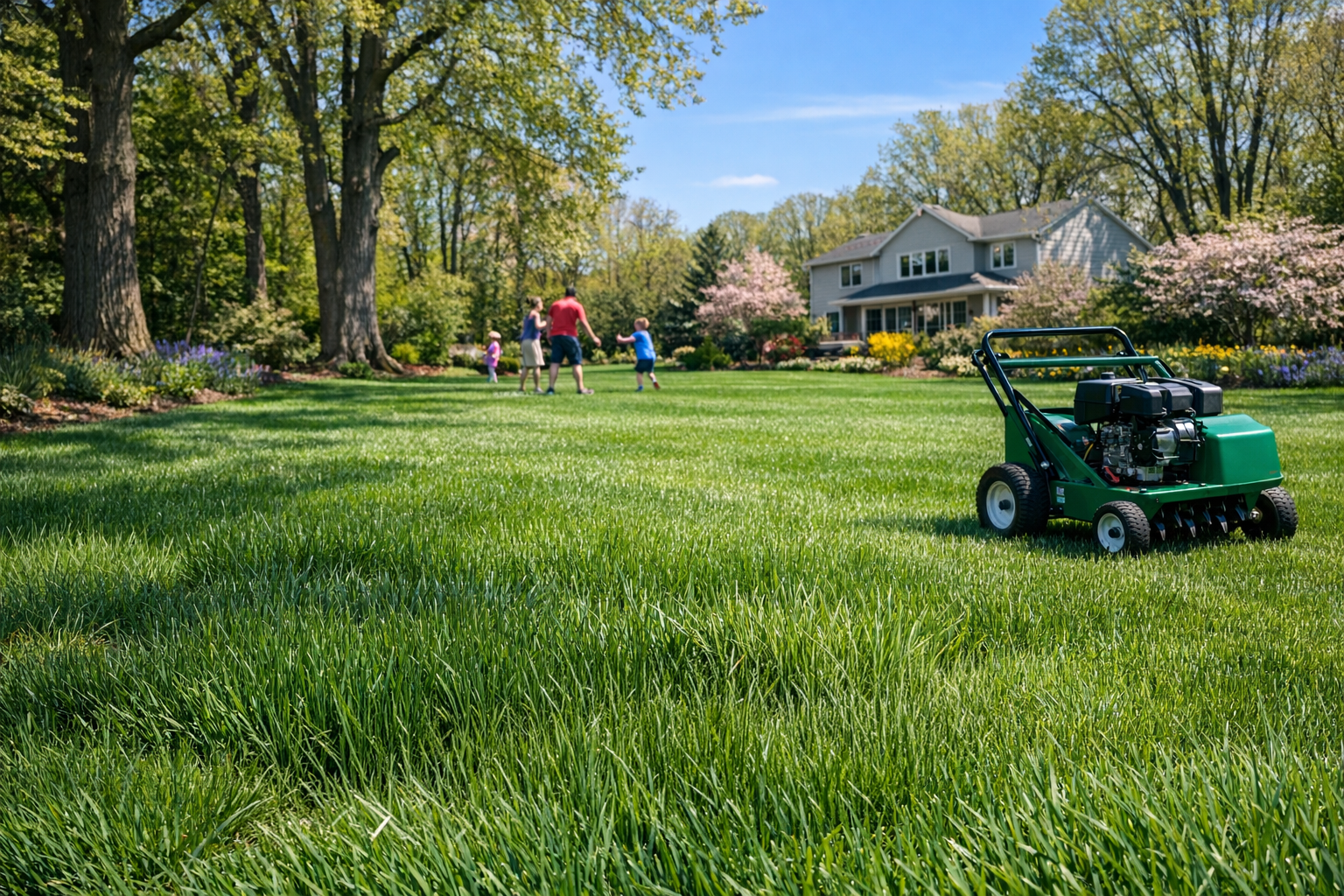
In Southeast Michigan, our lawns have to be tough. They need to survive sub-zero January freezes, soggy April showers, and those humid 90-degree July stretches. If you are looking to fill in bare spots or thicken up a thinning yard this spring, picking the right "cool-season" grass is the first step toward a lush, resilient lawn.
At Lush Lawn, we believe the best way to introduce these seeds to your soil is through Core Aeration and Overseeding. But before our technicians arrive, it helps to know which grass types thrive best in our local neighborhoods.
1. The Gold Standard: Kentucky Bluegrass (KBG)
If you picture a classic, deep-green, velvety lawn, you’re likely thinking of Kentucky Bluegrass. It is a Michigan staple for a reason.
-
The Michigan Edge: It is incredibly cold-hardy and "self-healing." Thanks to its underground root system (rhizomes), it can actually fill in small bare spots on its own over time.
-
The Trade-off: It craves full sun and regular moisture. If your yard is shaded by massive oaks, KBG shouldn't go it alone.

2. The Rugged Performer: Turf-Type Tall Fescue
Tall Fescue has gained massive popularity in Metro Detroit recently, especially for families with pets or active kids.
-
The Michigan Edge: It has deep roots (sometimes reaching 2–3 feet down!), making it our most drought-tolerant option. If we hit a dry spell in August, Tall Fescue is the last to turn brown.
-
Best Use: High-traffic areas and lawns with the heavy clay soil common in many Michigan communities.

3. The "Quick Fix": Perennial Ryegrass
If you have a bare patch that needs to disappear yesterday, Ryegrass is your best friend.
-
The Michigan Edge: It germinates faster than almost any other seed—often in just 5 to 7 days.
-
The Strategy: Professional blends use this as a "nurse crop." It grows quickly to protect the slower-growing Bluegrass while it establishes its roots.
4. The Shade Specialist: Fine Fescues
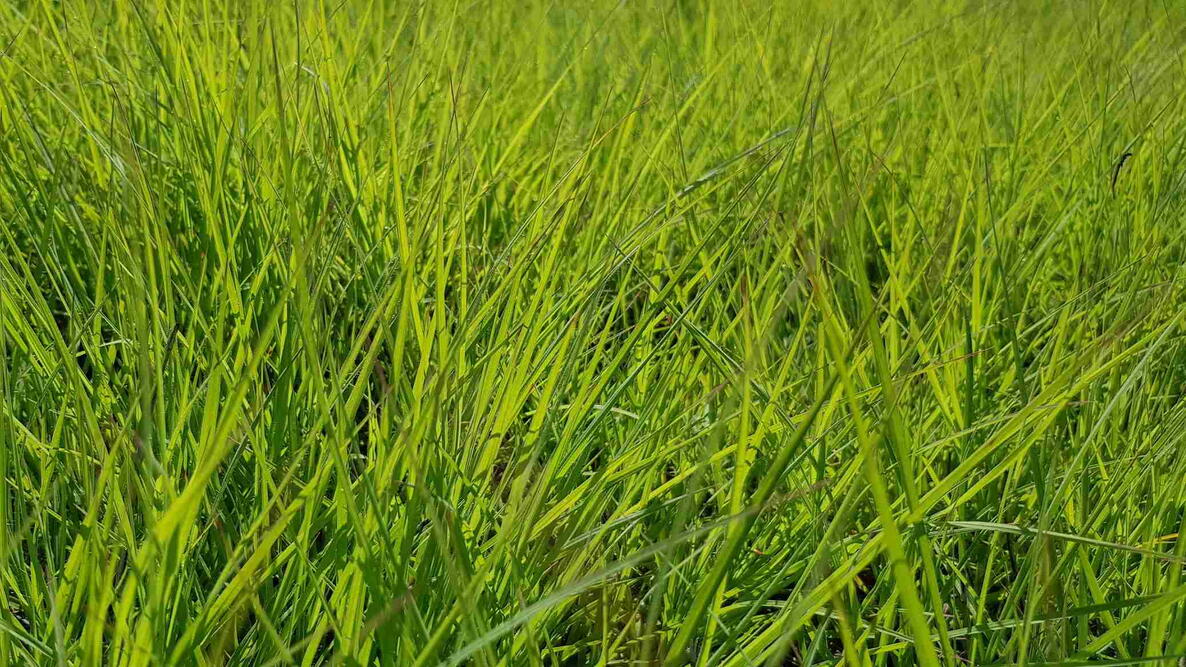
Do you have a beautiful, wooded lot but a thinning lawn? Fine Fescues (like Creeping Red or Chewings Fescue) are the "unsung heroes" of the shade.
-
The Michigan Edge: These grasses are remarkably patient with low light and poor soil. They are perfect for those tricky areas under your tree canopy.
Why Professional Aeration & Overseeding is the Secret Sauce
Even the most expensive bag of seed from a big-box store will struggle if it's just sitting on top of compacted Michigan clay.
That is where we come in. Our Core Aeration service pulls small plugs of soil from your yard, breaking up compaction and allowing oxygen, water, and nutrients to reach the root zone. When we follow that up with a professional Overseeding, those new seeds fall directly into those holes—ensuring the "seed-to-soil contact" necessary for a successful sprout.

Ready to Thicken Your Turf?
While Lush Lawn focuses on the science of fertilization and weed control to keep your grass healthy year-round, we are here to help you get that new growth started right.
Click here to schedule your spring aeration and overseeding! Let’s combine the right seed with the right professional touch for a lawn that stands up to anything a Michigan summer throws its way.
You’ve Seeded... Now What? (The 3 Golden Rules of Aftercare)
Once the aeration and overseeding are complete, the "baton" passes to you. The first few weeks are the most critical time for those new seedlings to establish themselves in your Michigan soil. Follow these three rules for the best results:
1. Keep it Moist (The "Goldilocks" Rule)
New seeds need consistent moisture to germinate, but you don't want to wash them away.
-
The Goal: Keep the top inch of soil moist, but not soaking wet.
-
The Routine: Instead of one long soaking, aim for 2–3 light waterings a day (about 5–10 minutes per zone) until the new grass is roughly two inches tall.
2. Hit "Pause" on the Mower
It’s tempting to want to keep the lawn looking tidy, but those tiny new sprouts are fragile.
-
The Rule: Try to wait until the new grass has reached a height of 3 to 3.5 inches before your first mow.
-
The Pro-Tip: When you do finally mow, make sure your blades are sharp and only take off the top 1/3 of the grass blade to avoid "stressing" the new plants.
3. Watch Your Step
We know the kids and pets are eager to get outside, but heavy foot traffic can crush delicate new seedlings and re-compact the soil we just aerated.
-
The Strategy: Try to limit traffic on the overseeded areas for at least 3 weeks. If you have a high-traffic "dog run" area, consider cordoning it off temporarily to give the fescue or bluegrass a fighting chance to take root.
Let Us Handle the Rest
While you handle the watering, our Fertilization and Weed Control programs are designed to feed those new roots and keep invasive weeds from "crowding out" your new grass. Together, we’ll make sure your lawn doesn't just grow—it thrives.
