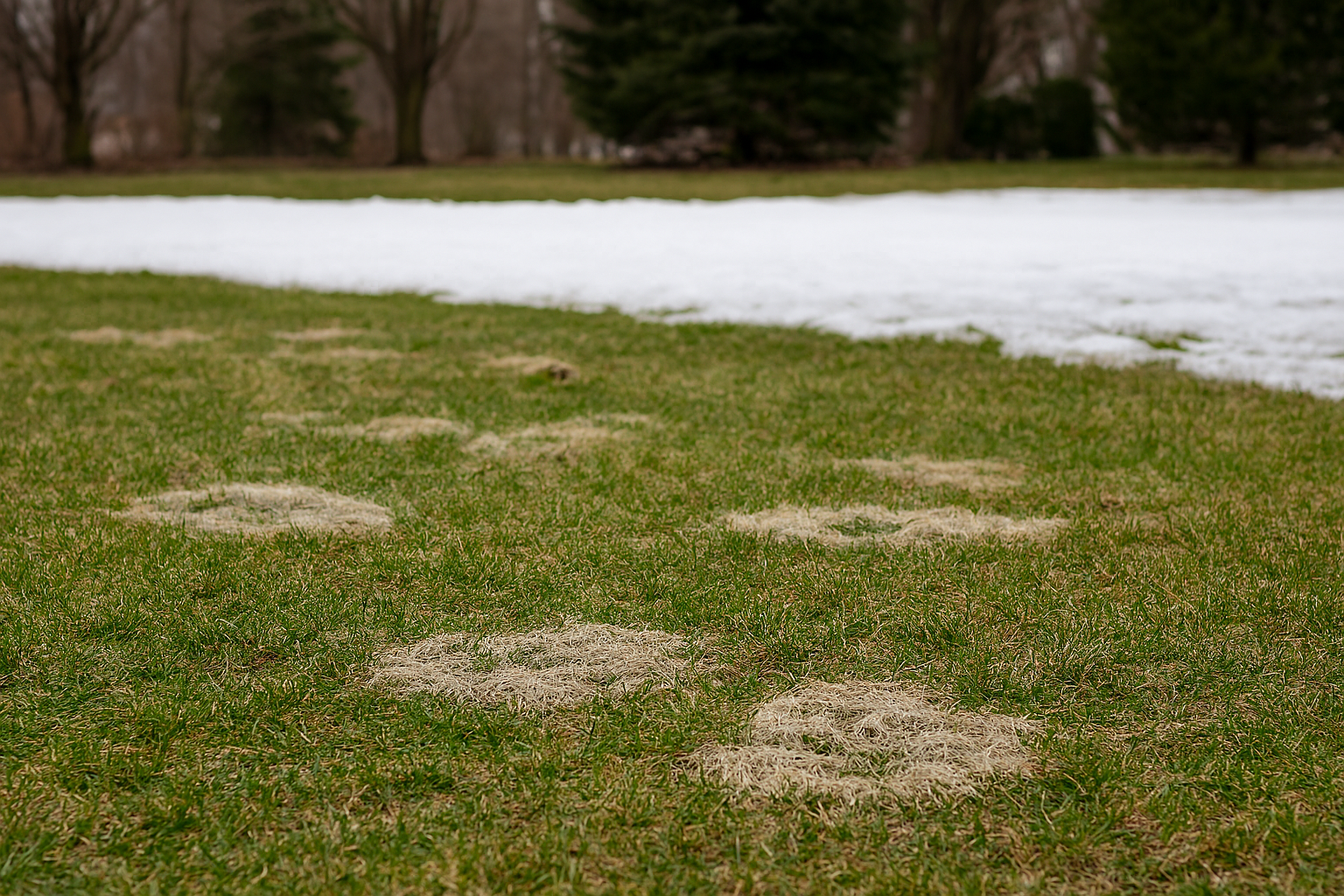
When winter rolls into Southeast Michigan, most homeowners stop thinking about their lawns. After all, they’re buried under a blanket of snow, right? But here’s the thing: what’s happening under that snow can make or break your lawn come spring. One sneaky culprit? Snow mold.
Let’s dive into what snow mold is, why it forms, and—most importantly—how you can prevent it so your lawn wakes up healthy and green when the snow melts.
What Is Snow Mold?
Snow mold is a fungal disease that affects grass during winter and early spring. It thrives under snow cover when the ground isn’t completely frozen.
There are two main types to watch for:
%2c%20and%20matted%2c%20bleached%20leaves%20in%20an%20individual%20patch%20(right).%20Photos-%20Peter%20Landschoot%2c%20Penn%20State.webp?width=1200&length=1200&name=Gray%20snow%20mold%20patches%20of%20differing%20sizes%20and%20shapes%20near%20a%20building%20on%20the%20Penn%20State%20University%20Park%20campus%20(left)%2c%20and%20matted%2c%20bleached%20leaves%20in%20an%20individual%20patch%20(right).%20Photos-%20Peter%20Landschoot%2c%20Penn%20State.webp)
- Gray Snow Mold (Typhula blight): Usually less severe, but still leaves unsightly patches.
- Pink Snow Mold (Microdochium patch): More damaging and can kill grass crowns.
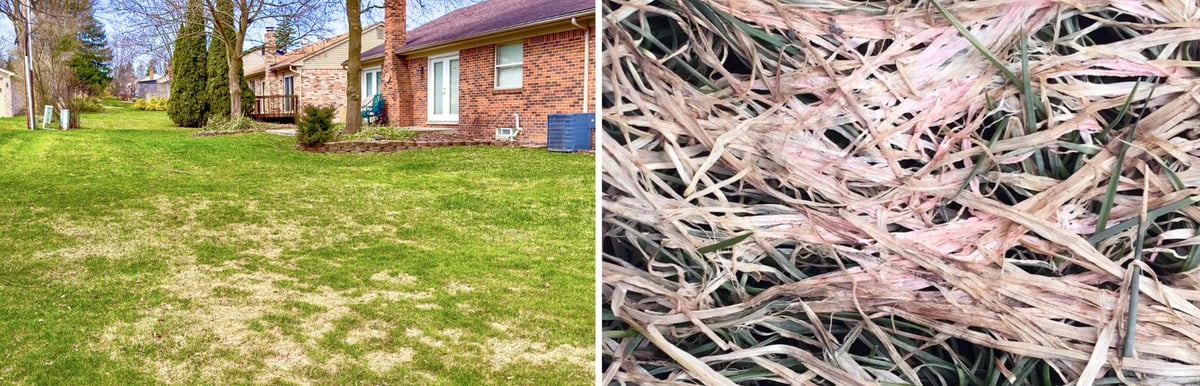
Both show up as circular, matted patches of dead-looking grass when the snow melts—often gray, white, or pinkish in color.
How Does Snow Mold Form?
Here’s the recipe for snow mold:
- Long-lasting snow cover on unfrozen ground, moist soil
- Trapped moisture and organic matter (like leaves, excess thatch, and long grass)
- Cool, wet temperatures—common during Southeast Michigan’s freeze-thaw cycles
In Southeast Michigan, our winters often bring heavy snowfalls followed by fluctuating temps. That means lawns can stay damp and insulated for weeks—create ideal conditions for snow mold.
How to Prevent Snow Mold
The good news? You can stop snow mold before it starts with a little prep and monitoring.
1. Do a Proper Fall Cleanup
This is your first line of defense!
- Rake up the leaves thoroughly: Don’t leave leaf piles or debris sitting on your lawn. When moisture get trapped underneath, it creates the perfect breeding ground for fungus.
-
Give your lawn a final trim before the first snowfall: Aim for 2.5 to 3 inches. If the grass is too long, it will get matted down under the snow, creating conditions where snow mold can develop.
-
Dethatch if needed: Thatch is a layer of dead grass stems, roots, and organic material that builds up between the green blades and the soil. A thin layer (½ inch or less) is healthy—it helps retain moisture and protect roots. But when thatch gets too thick, it:
- Blocks water, nutrients, and air from reaching the soil.
- Creates a perfect environment for pests and fungal diseases like snow mold.
- Makes your lawn feel spongy and uneven.
Quick Check: Pull up a small section of grass. If the brown layer between soil and green blades is thicker than ½ inch, it’s time to dethatch before winter.
2. Fertilize Smart
Lush Lawn's Fall Root Stimulant helps strengthen roots for winter. Healthy grass fights off disease better.
3. Avoid Snow Piles
When shoveling, try not to stack snow too high on your lawn. Big piles take longer to melt, which means the grass underneath stays wet for weeks—prime conditions for snow mold. If you already have large piles, spread them out during a thaw to help them melt faster and keep your lawn healthier.
4. Clear Heavy Ice Crusts
If you notice ice forming on top of the snow, gently break it up so the turf can breathe and dry out properly. Ice traps moisture and blocks airflow.
5. Avoid Walking on Snow-Covered Lawn
Foot traffic compacts snow and grass, making it harder for turf to breathe and recover. Stick to sidewalks and paths.
6. Take Advantage of Winter Warm-Ups
Southeast Michigan often gets mid-winter warm-ups, and that’s your chance to help your lawn. When the snow starts to melt, check for matted grass and gently fluff those areas with a rake to imporve air circulation and helps prevent mold from spreading.
7. Monitor Problem Areas
Shady spots, areas near driveways where snow piles up, and low spots that hold moisture are most at risk. Keep an eye on these zones during mid-winter warm-ups.
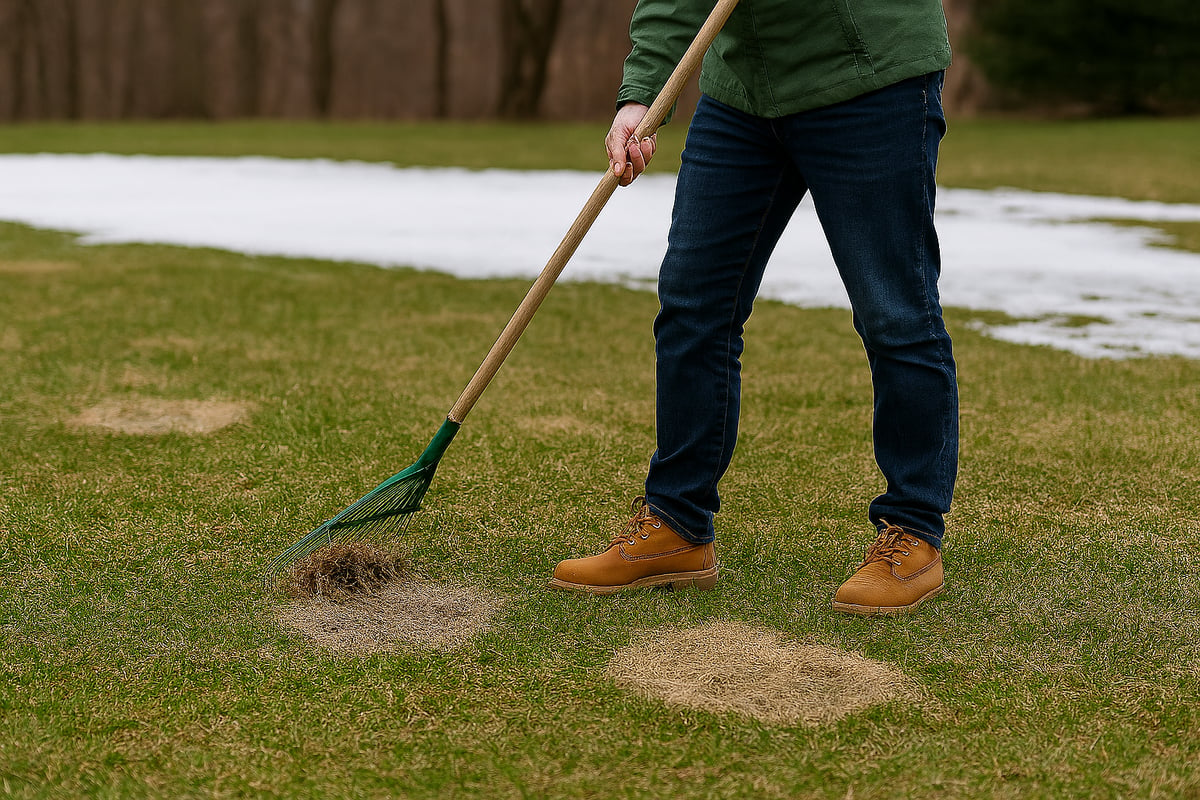
What If You See Snow Mold in Spring?
Don’t panic! Here’s what to do:
- Gently rake affected areas to break up matted grass.
- Overseed bare patches once soil warms.
- Schedule a spring lawn health check—Lush Lawn can help with overseeding, fertilization, and soil testing.
Final Tip
Snow mold prevention is all about fall prep and winter awareness. A little effort now means a lush, green lawn later. And if you need help with lawn care services, Lush Lawn has your back! Want a healthier, mold-resistant lawn this spring? Book Lush Lawn’s fall prep, soil testing, and spring recovery services—we’ll help your yard wake up vibrant and green.