
Avoid Soil Heaving, Root Stress & Winter Lawn Drama
If you’ve lived in Michigan for more than five minutes, you know our weather has moods. One day it’s freezing. The next? Practically spring. And while this emotional rollercoaster keeps life interesting, it can be rough on your lawn.
Let’s break down what’s really happening under the surface—and what you can do to keep your turf strong all winter long.
What Are Freeze–Thaw Cycles (…and Why Should You Care)?

A freeze–thaw cycle happens when temperatures drop below freezing at night, then warm back up during the day. This can happen dozens of times through a Michigan winter—sometimes in a single week.
Your lawn feels every one of them.
Signs Your Lawn Struggled With Freeze–Thaw Stress
Keep an eye out in early spring for:
- Raised or bumpy soil
- Bare patches
- Grass that looks “lifted”
- Areas that stay brown longer than the rest
These are all signs your lawn fought a tough winter battle—and might need some spring TLC.
Soil Heaving: The “Push-Up” You Don’t Want
As the soil freezes, it expands. When it thaws, it contracts.
Over and over again.
This constant movement can actually push plant roots upward—a process called soil heaving. It’s like your lawn is trying to do a sit-up and doesn’t quite make it.

Why it’s a problem:
- Exposed roots dry out quickly
- Grass becomes vulnerable to cold injury
- Newer or shallow-rooted grass can be lifted right out of the ground
Young lawns and thin areas are the most at risk.
Root Stress: Your Grass Is Basically Holding Its Breath
Even when the grass is dormant, roots are still alive and working. Freeze–thaw cycles put those roots under a ton of stress by:
- Reducing moisture availability
- Damaging fine root hairs
- Increasing the risk of desiccation (fancy word for drying out)
If roots get damaged in winter, spring green-up is slower—and bare patches may appear like unwanted guests.

How to Protect Your Lawn Now as Michigan Moves Into Spring
1. Start With a Gentle Spring Cleanup
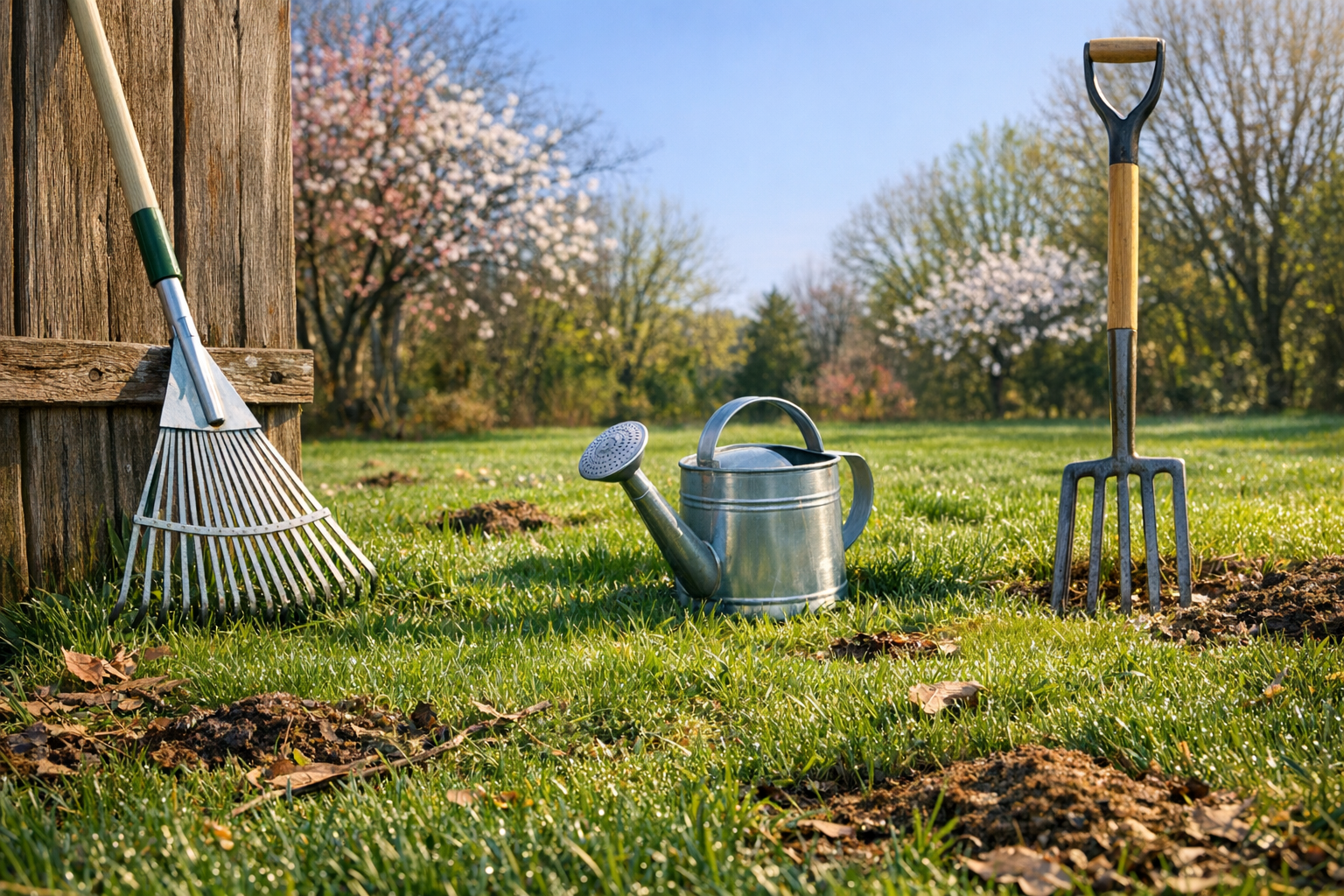
Freeze–thaw cycles leave debris everywhere — small branches, matted grass, leftover leaves. A light rake helps:
- Break up “snow mold” patches
- Prevent smothering
- Allow air and sunlight to reach struggling turf
Just be gentle: your lawn is still soft and easily damaged.
2. Check for Heaved or Lifted Grass
Look for:
- Raised soil bumps
- Grass clumps sitting higher than normal
- Exposed or pushed‑up roots
Press them back down carefully with your foot — it helps roots reconnect to the soil before growth starts.
3. Repair Bare or Thin Spots
Freeze–thaw stress + foot traffic + winter dryness = thin turf. Right now is a perfect time to:
- Add a light layer of topsoil
- Overseed damaged areas
- Keep the seed moist
This helps your lawn fill in before weeds try to move in.
4. Let Us Feed Your Lawn With a Spring Fertilizer
After months of stress, your grass needs nutrients to regrow strong roots. A spring fertilizer helps:
- Kickstart green‑up
- Strengthen root systems
- Recover freeze–thaw damage faster
(And yes — Lush Lawn’s early spring application is designed exactly for this.)
5. Fix Compacted or Bumpy Areas
Freeze–thaw cycles naturally compact soil. This leads to poor drainage and weak root growth. You can help by:
- Loosening compacted soil with a rake or garden fork
- Adding a thin layer of compost to improve soil structure
- Aerating in late spring when the grass is actively growing
(If the lawn is still too soft, wait until it's firm enough.)
6. Water if Conditions Are Dry
Even in early spring, lawns can dry out — especially if we get a warm streak. Give your lawn a light drink if:
- The soil is dry
- Grass looks “crunchy”
- There hasn’t been rain
Hydrated roots recover from freeze–thaw damage much faster.
7. Avoid Heavy Foot Traffic
Your lawn is soft right now — like a sponge thawing out. Walking on it can:
- Compact soil
- Damage roots
- Create ruts
Use walkways as much as possible until the ground firms up.

Protect Your Lawn Now for a Greener Spring
Michigan’s weather may be unpredictable, but your lawn care doesn’t have to be. Preparing now helps you avoid damage and enjoy a thicker, greener lawn once things finally warm up.
Let Lush Lawn help strengthening your lawn before Mother Nature gets moody? Lush Lawn’s early-spring services are designed exactly for this.